





Callaway has completely refreshed its driver lineup with the new Elyte family, and early testing suggests this could be one of the brand's most complete metalwood ranges in years. Designed to deliver faster clubhead speed, improved forgiveness, and tighter dispersion, the Elyte drivers build upon the success of the Paradym Ai Smoke range while introducing a noticeably more refined overall package.
The lineup consists of three primary models - the standard Elyte, Elyte X, and Elyte Triple Diamond - each engineered for very different player profiles. Whether you are a mid-handicap golfer seeking more fairways, a higher-handicap player chasing forgiveness, or a stronger ball striker looking for low-spin performance, Callaway has created a fitting option for virtually every type of golfer.
At the centre of the range is Callaway's new Ai10x Face technology combined with a lightweight Thermoforged Carbon Crown, both designed to improve speed retention and optimise launch conditions across a much larger portion of the face.
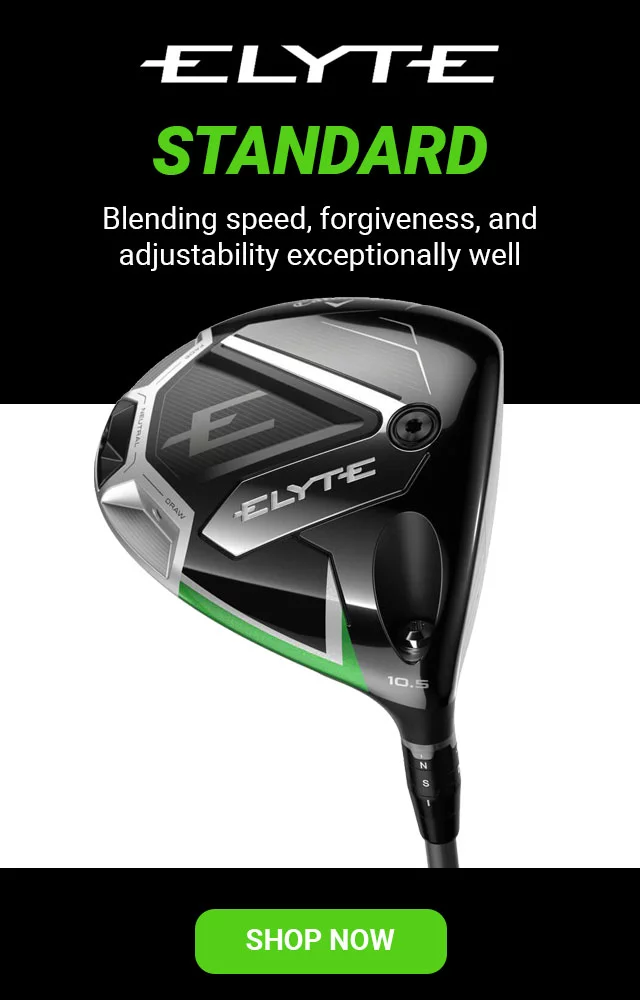
Callaway Elyte Driver
The standard Elyte driver is the all-round performer in the range, blending speed, forgiveness, and adjustability exceptionally well.
Callaway has refined the shaping considerably compared to previous generations, giving the Elyte a more aerodynamic profile while maintaining plenty of confidence behind the ball. The slightly stretched profile inspires stability without appearing oversized at address.
Testing showed excellent ball speed consistency across the face, particularly on slight toe and low-face strikes. The 13g adjustable perimeter weighting also allows golfers to fine-tune shot shape bias more effectively than previous Callaway models.
Current pricing at Click Golf UK starts from approximately £379.
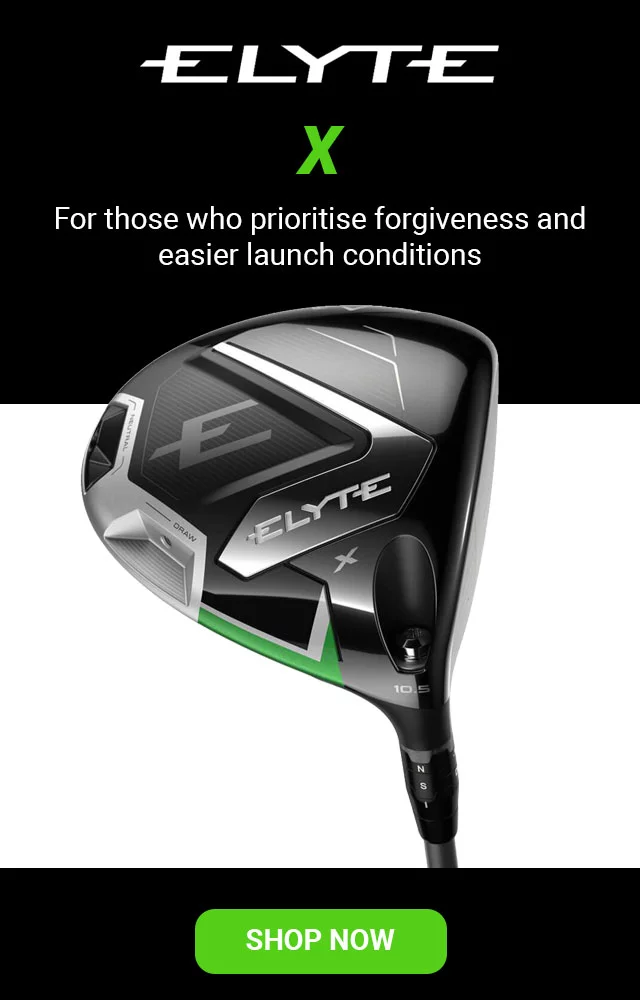
Callaway Elyte X Driver
A high-launch, draw-biased driver built to maximise forgiveness and improve directional consistency.
Compared to the standard Elyte, the X version features a more stretched-back profile with additional draw bias and higher MOI characteristics. This makes it particularly effective for golfers who struggle with a fade or slice.
Launch monitor testing showed noticeably higher launch and increased stability on heel strikes, making it one of the most forgiving drivers currently available in the premium category.
Golfers with moderate swing speeds will especially benefit from the easier launch window and improved carry consistency.
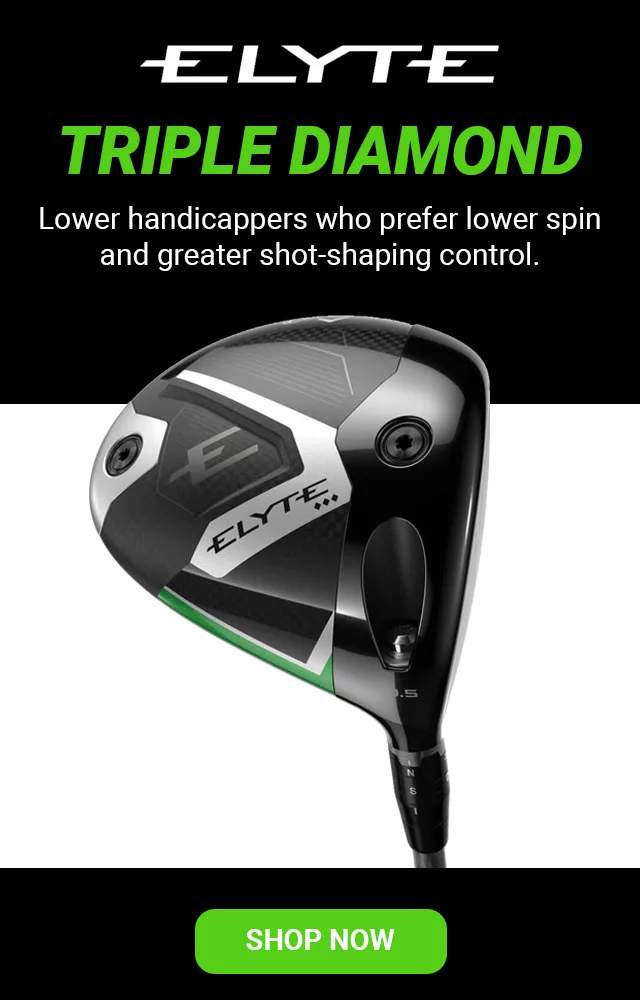
Callaway Elyte Triple Diamond Driver
A compact low-spin driver engineered for faster swing speeds, tour-level control, and penetrating launch conditions.
This is the most compact and lowest-spinning head in the Elyte family. The slightly pear-shaped profile sits beautifully behind the ball and will appeal to confident drivers of the golf ball looking for more workability.
During testing, the Triple Diamond consistently produced the lowest spin numbers and strongest ball flights, particularly for golfers swinging above 105mph.
Current pricing at Click Golf UK - Elyte Triple Diamond Driver starts from approximately £389.
We tested the Elyte drivers indoors using premium golf balls and launch monitor analysis alongside multiple on-course sessions to evaluate forgiveness, consistency, spin control, and real-world playability.
The standout feature across the Elyte range is ball speed retention.
The new Ai10x Face appears significantly more stable on off-centre strikes compared to previous Callaway generations. Callaway claims the Elyte can deliver up to eight additional yards over the Paradym Ai Smoke MAX in consumer testing.
Average Driver Carry Distances:
The standard Elyte produced the best overall balance between carry distance and forgiveness, while the Triple Diamond generated the highest ball speeds for stronger swingers.
Launch and spin separation between the models is extremely well defined.
The Elyte X launches the highest with mid-spin stability, making it ideal for golfers needing more carry and forgiveness.
The Triple Diamond produces a flatter, more penetrating trajectory with significantly lower spin rates, particularly beneficial in windy conditions or for faster swingers seeking rollout.
Spin Characteristics:
Forgiveness levels across the lineup are impressive, but each head achieves it differently.
The Elyte X clearly offers the highest stability on mishits, especially heel-side misses commonly associated with slicers.
The standard Elyte remains highly forgiving while still allowing moderate shot shaping.
The Triple Diamond is naturally less forgiving but remains more stable than previous Callaway Triple Diamond generations.
Several Reddit golfers highlighted the impressive speed and forgiveness balance within the Elyte lineup.
| Category | Callaway Elyte Driver | Callaway Elyte X | Callaway Elyte Triple Diamond Driver |
|---|---|---|---|
| Forgiveness | High | Very High | Moderate |
| Launch | Mid-High | High | Mid |
| Spin | Mid-Low | Mid | Low |
| Shot Bias | Neutral | Draw Bias | Neutral/Fade |
| Workability | Moderate | Low | High |
| Handicap Range | 5-20 | 12-30 | Plus to 10 |
| Swing Speed Suitability | Moderate-Fast | Moderate | Fast |
| Head Shape | Refined stretched profile | Oversized stretched profile | Compact tour profile |
| Best For | All-round performance | Forgiveness & launch | Low-spin control |
| Starting UK Price | £379 | £379 | £389 |
Callaway's Ai10x Face represents the biggest technological advancement within the Elyte range.
The face incorporates significantly more control points than previous AI-designed faces, helping maintain ball speed, launch, and spin consistency across a wider impact area.
For golfers, that means more consistent distance even when strikes are not perfectly centred.
The new Thermoforged Carbon Crown uses aerospace-grade carbon fibre to reduce weight high in the head and reposition mass lower and deeper.
This improves:
The lighter crown also contributes to the improved aerodynamic profile, helping golfers generate more clubhead speed naturally.
The Elyte and Triple Diamond models both feature adjustable perimeter weighting that allows golfers to fine-tune ball flight bias.
Players can shift weighting to encourage:
This level of adjustability makes proper fitting particularly valuable within the Elyte range.
One of the most noticeable improvements over previous Callaway drivers is sound.
The Elyte family produces a more muted, solid acoustic at impact compared to the louder metallic sound found in some earlier Callaway models.
The Triple Diamond delivers the most compact, tour-style crack at impact, while the Elyte X feels slightly more muted and stable through the strike zone.
Overall, the sound and feel are considerably more premium than many competing game-improvement drivers.

The Callaway Elyte driver family is arguably one of the most complete driver ranges Callaway has released in recent years.
The standard Elyte stands out as the best overall model thanks to its excellent combination of speed, forgiveness, adjustability, and visual refinement. Meanwhile, the Elyte X is a genuine confidence booster for golfers seeking straighter, higher-launching drives, while the Triple Diamond delivers serious low-spin performance for stronger players.
What impresses most is how clearly separated the models are. Each driver has a very distinct launch profile and player fit, making proper fitting more meaningful and effective.
For golfers looking to upgrade in 2026, the Elyte range deserves serious consideration, particularly given the current UK pricing available through Click Golf UK.
Yes. The Elyte X is the most forgiving model, while the standard Elyte offers an excellent balance of forgiveness and workability.
The Elyte X is best suited to golfers who fight a slice thanks to its draw-biased design and higher MOI profile.
The Triple Diamond is designed for stronger players and lower handicappers. It is less forgiving than the standard Elyte or Elyte X but remains more stable than previous Triple Diamond generations.
At the time of writing, pricing at Click Golf UK starts from approximately:
The Elyte improves upon the Paradym Ai Smoke with enhanced aerodynamics, improved forgiveness, and more stable ball speed retention across the face.

