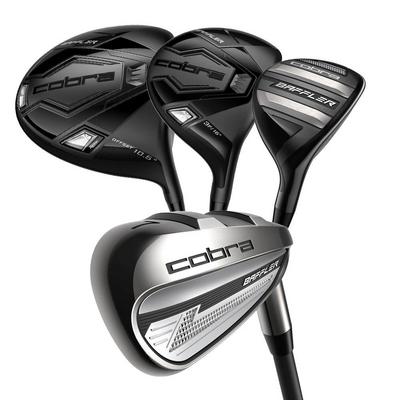
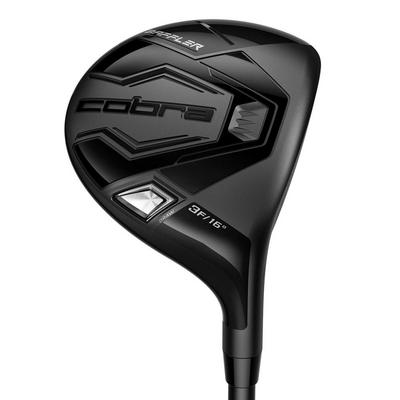
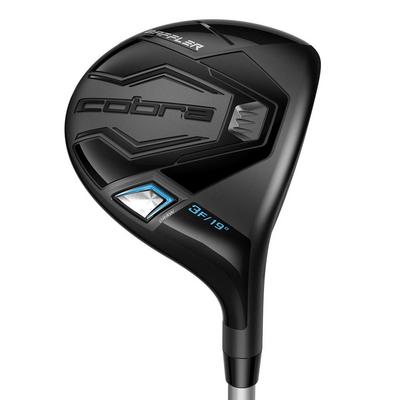
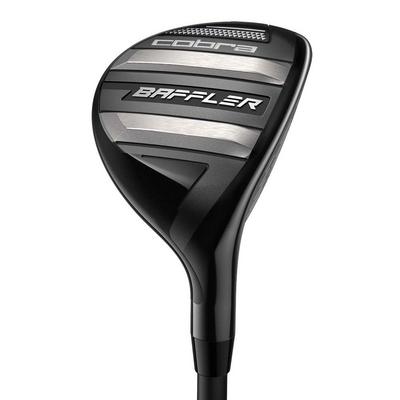
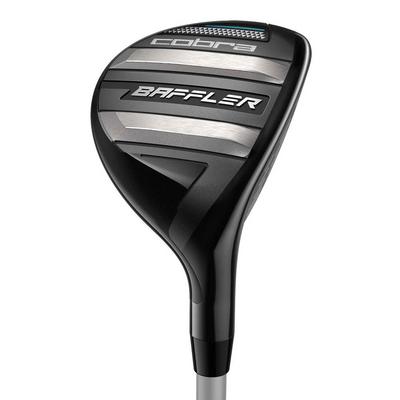
The Cobra Baffler story stretches back more than five decades, making it one of the most established names in game-improvement golf equipment. From its earliest beginnings, the Baffler concept has focused on a simple objective: helping golfers make difficult long-game shots easier to play.
Originally introduced in 1975, the first Cobra Baffler offered golfers an alternative to demanding long irons and traditional woods. Its innovative construction was created to improve versatility and help the club move more effectively through different lies, establishing a design philosophy that would become closely associated with the Cobra brand.
Today's Cobra Baffler golf clubs use modern materials and technologies to pursue that same fundamental goal. Lightweight construction, forgiving clubhead designs, H.O.T. Face Technology and carefully engineered weighting are all used to help everyday golfers generate easier speed, higher launch and more consistent results.
Cobra Golf was founded in 1973 by Australian golfer and club designer Thomas Crow. Only two years later, Cobra introduced the original Baffler, a club that would become an important part of the company's identity.
The first Baffler was a 23° laminated utility wood equipped with a patented sole plate. At a time when long irons remained notoriously difficult for many golfers to use consistently, its distinctive construction provided a different way to approach longer shots from the fairway and difficult lies.
Cobra's inspiration for the sole design was particularly unusual. The concept drew influence from catamarans moving across the Pacific Ocean, with the sole engineered to travel through the turf efficiently rather than allowing excessive surface area to interfere with the ground.
That innovative approach helped establish Baffler as a name synonymous with practical, golfer-friendly club design.
The original Cobra Baffler appeared many years before hybrids became commonplace in golf bags. Yet its purpose addressed many of the same problems that eventually drove the popularity of modern hybrid clubs.
Traditional long irons require sufficient clubhead speed, precise strike and consistent delivery to generate effective launch and carry. For many recreational golfers, producing those conditions repeatedly can be difficult.
Baffler approached the long game from another direction: create equipment that launches more easily, offers additional forgiveness and performs effectively from a greater variety of lies.
Across subsequent generations, the Baffler philosophy has appeared in Cobra utility clubs, hybrids, fairway woods and drivers, evolving with modern golf technology while maintaining its focus on making the game more playable.
The Baffler name represents more than one individual golf club. It has become associated with Cobra's long-running approach to designing equipment that makes challenging shots less intimidating for the everyday golfer.
Modern Baffler clubs are engineered around several common problems experienced by amateur players, including difficulty generating clubhead speed, low launch, inconsistent strike location and unwanted shot curvature.
The emphasis is therefore firmly on forgiveness, easy launch, playable distance and confidence rather than demanding low-spin or compact tour-style performance.
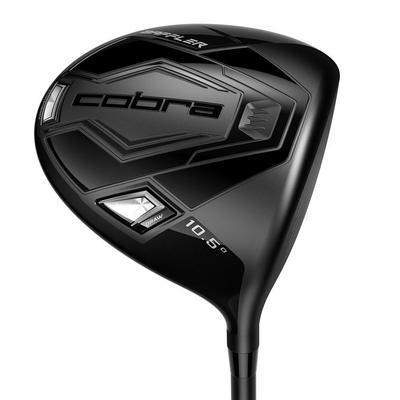
The modern Cobra Baffler family provides different head configurations to suit different golfers. The Cobra Baffler Driver is available in a traditional straight-neck configuration, giving players the lightweight and forgiving characteristics of the Baffler platform with a more conventional appearance behind the ball.
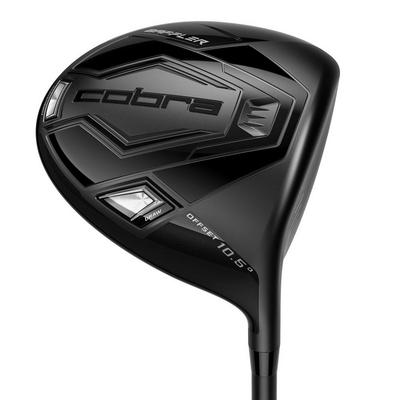
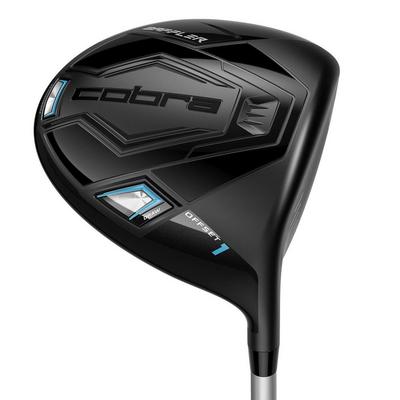
For golfers who require additional assistance controlling a slice, selected Baffler Offset models use visible offset together with draw-biased weighting to provide greater correction.
This means golfers can choose the Baffler configuration that better matches their ball flight rather than automatically having to play an offset golf club.
Offset describes the relationship between the hosel and clubface. With an offset club, the leading edge of the face sits slightly behind the forward edge of the hosel.
Although visually it may appear to be a relatively small design change, offset can provide valuable assistance to golfers who regularly arrive at impact with the clubface open.
The additional positioning gives the clubface slightly more opportunity to return towards square through impact, making offset particularly useful for golfers whose typical shot curves excessively from left to right.
For right-handed golfers, a slice typically curves excessively from left to right. While several swing characteristics can contribute to that flight, the relationship between clubface angle and swing path is fundamental.
An offset driver or offset fairway wood can provide additional assistance for players who struggle to square the clubface. By positioning the face slightly farther behind the shaft line, the design can help encourage a more favourable face position through impact.
Offset cannot completely correct poor swing mechanics, but when matched to the appropriate golfer it can reduce the severity of a common miss and help produce a straighter, more playable ball flight.
On draw-biased Baffler models, additional mass is positioned towards the heel of the clubhead. Heel weighting can make the head easier to rotate through impact, complementing the assistance provided by an offset hosel.
The objective is not necessarily to turn every shot into a pronounced draw. Instead, the technology is intended to reduce excessive fade or slice curvature and help shots finish closer to the golfer's intended target.
For players who consistently lose drives or fairway shots to the right, the combination of offset and draw-biased weighting can provide useful built-in assistance.
Not every golfer needs substantial slice correction. Players who prefer a conventional appearance at address may therefore favour the straight-neck Cobra Baffler Driver.
A straight-neck configuration provides the familiar appearance of a traditional driver while retaining the lightweight construction, generous forgiveness and easy-launch characteristics associated with the Baffler range.
This makes it an appealing choice for golfers who want Baffler's game-improvement performance without the more noticeable appearance of an offset hosel.
Lightweight construction is an important part of the modern Cobra Baffler philosophy. Reducing weight through the head, shaft and grip can make a golf club easier to accelerate, particularly for golfers who naturally generate speed through rhythm rather than aggressive effort.
Instead of requiring the golfer to swing harder, a lighter overall configuration can help generate useful clubhead speed while allowing the player to maintain a smoother tempo.
This can make Cobra Baffler golf clubs particularly attractive to beginners, improving players, seniors and golfers with moderate swing speeds.
Modern Baffler Drivers and Fairway Woods incorporate Cobra's H.O.T. Face Technology, using an A.I.-designed variable thickness pattern to optimise performance across a larger section of the clubface.
Golfers rarely strike every shot directly from the centre. Impact position can move towards the heel, toe, upper or lower sections of the face throughout a round.
H.O.T. Face Technology is designed to help retain useful ball speed when contact is imperfect, reducing the performance loss associated with common mishits and helping produce more dependable distance.
The Cobra Baffler Fairway Woods combine lightweight construction with a traditional shallow face profile, high-launch performance and extreme forgiveness.
A shallower face can make launching the golf ball from the turf less demanding, making the Baffler Fairway particularly useful for golfers who struggle to achieve consistent height with conventional fairway woods.
Available across 3-wood, 5-wood and 7-wood configurations, the range also allows golfers to create practical distance gaps while maintaining familiar performance characteristics throughout their longer clubs.
One of the strengths of the Baffler concept is its versatility. A forgiving Baffler Driver can provide confidence from the tee, while Baffler Fairway Woods extend the same easy-launch philosophy into longer shots from the fairway and light rough.
Golfers can therefore build the top end of the bag around clubs designed with similar priorities: easier speed, dependable launch, greater forgiveness and improved consistency.
Cobra Baffler golf clubs are designed primarily for golfers who want their equipment to make the long game more manageable. Rather than demanding perfect strike or high swing speed, the range places a strong emphasis on helping everyday golfers produce useful results more consistently.
Baffler clubs may be particularly suitable for golfers who:
No golf club can replace good swing mechanics, but correctly matched equipment can make common shots considerably less demanding.
A golfer struggling for speed may benefit from lighter components. Someone losing distance through inconsistent strike can benefit from additional face forgiveness. A player who regularly leaves the face open may find an offset, draw-biased model provides useful assistance in reducing unwanted curvature.
The important principle is matching the equipment to the golfer, and that philosophy sits at the centre of the Baffler concept.
From the original 23° Baffler utility wood of 1975 to today's lightweight Drivers and Fairway Woods, the Cobra Baffler name has remained closely connected with game-improvement golf equipment.
The technology has changed dramatically over those five decades, but the underlying objective remains recognisable: create golf clubs that help ordinary players deal with difficult shots more effectively.
Modern face engineering, lightweight components, forgiving head shapes and different straight-neck or offset configurations continue that philosophy for a new generation of golfers.
For players searching for forgiving Cobra golf clubs, easy-to-hit fairway woods, lightweight drivers, offset golf clubs, slice-correcting fairway woods or golf clubs for moderate swing speeds, the Cobra Baffler family combines more than 50 years of heritage with modern game-improvement technology.